
Eyelid Lumps in Children
What Are Eyelid Lumps in Children?
An eyelid lump is any raised bump or swelling on the upper or lower lid. Children get them often. The eyelids contain lots of tiny oil glands and lash follicles, and these can get block or infected easily.
Some lumps are sore and red, while others are painless and can remain unchanged for some time. Some appear overnight, and some are there from birth and slowly grow. In most cases, the lump is benign, meaning it isn’t cancer. Many settle on their own, but some need treatment, and a few need to be seen quickly.
If a lump hasn’t gone after a few weeks, keeps growing, or is bothering your child, it’s worth getting it checked.
Children’s conditions Eyelid Lumps in Children
Eyelid Lumps
Eyelid lumps and bumps in children are very common. Many resolve spontaneously such as a blocked oil gland (Chalazion). If a child is experiencing a lump under the eyelid that persists, enlarges, or discharges should be checked to rule out anything serious. Children who are fair-skinned or who have a history of rodent ulcers or basal cell carcinomas, need to use extra caution.
What are the symptoms of eyelid lumps in children?
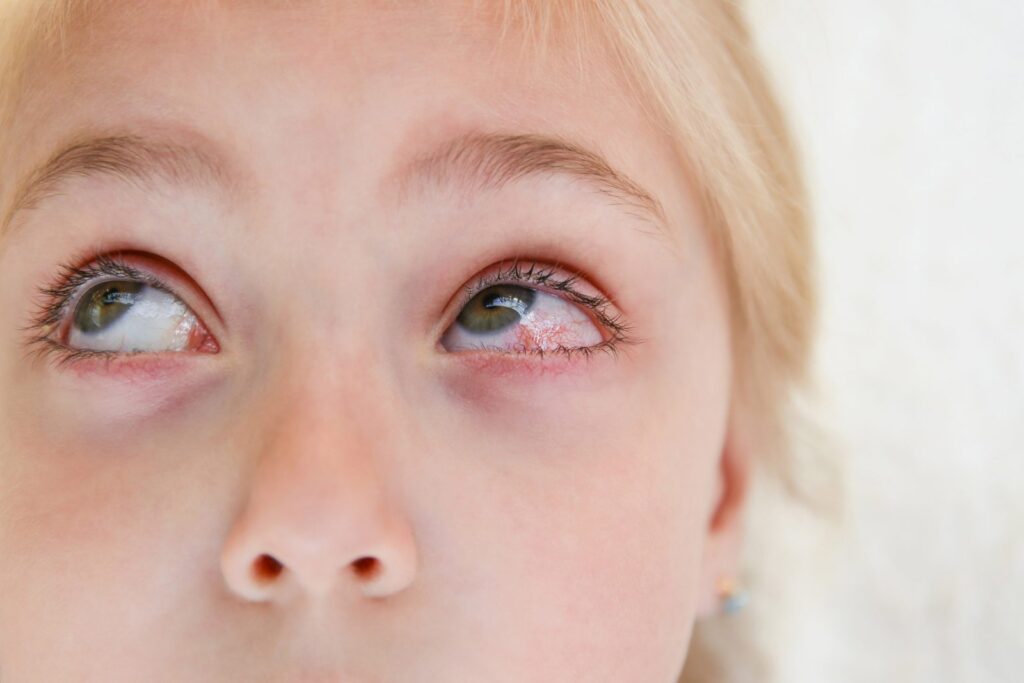
Eyelid lumps can be painless or painful. They can be any colour; skin coloured, yellow, white, black, red. Lumps on the eyelid can discharge or bleed, they can be itchy. They can grow quickly or very slowly.

What Causes A Lump On A Child’s Eyelid?
Most eyelid lumps in children are harmless and come from a blocked or infected gland. The most common causes are:
- Chalazion: A firm, round lump caused by a blocked oil gland, usually a little back from the lash line. It is often painless and can last for weeks or months.
- Stye: A sore, red bump right at the lid edge, caused by an infected eyelash follicle. It looks like a pimple and usually improves within a week or two.
- Other causes: Molluscum contagiosum, dermoid cysts and infantile haemangiomas are less common but need a proper check.
What Symptoms Should I Look Out For?
Contact your doctor or us if you notice any of these:
- A visible lump on the upper or lower lid
- Redness, warmth or tenderness
- Watering, itching or a gritty feeling
- Crusting or discharge on the lashes
- A drooping lid, or an eye that’s partly closed
- Your child rubbing the eye a lot
- Blurry vision, which can happen if a lump presses on the eye
Pain doesn’t tell you how serious a lump is. Some painful lumps are minor, and some painless ones need treating.
How Are Eyelid Lumps in Children Diagnosed?
Diagnosis starts with a conversation about when you first noticed the lump and whether it has changed. We then examine the lump, the lids, the lashes and the eye, and check your child’s vision as far as their age allows. Most lumps can be identified from the examination alone. A scan or a small tissue sample (biopsy) is only needed if a lump looks unusual, sits deep or is growing.
How Are Eyelid Lumps In Children Treated?
Treatment depends on what the lump is, how big it is and whether it affects your child. Common options include:
- Warm compresses and lid care: Often all that a stye or chalazion needs.
- Medication: Antibiotics for spreading infection, or specialist-supervised treatment for haemangiomas.
- Minor procedures: Draining a chalazion that has not settled, or removing a dermoid cyst, often under general anaesthetic in younger children.
Any lump that bleeds, grows quickly or changes colour is examined carefully and tested if needed. Eyelid cancer in children is very rare.
What Are The Benefits Of Treating Eyelid Lumps Early?
The right diagnosis and treatment brings clear benefits for your child:
- Peace of mind: You know what the lump is and whether it needs treating at all.
- Comfort: Pain, irritation, watering and swelling are eased.
- Protecting vision: Large lumps and haemangiomas can block or distort a child’s vision, so early treatment supports healthy visual development.
When Should I See A Doctor About My Child’s Eyelid Lump?
- Is still there after 4 to 6 weeks, or keeps coming back
- Is growing, painful, leaking, bleeding or changing colour
- Affects vision, makes the lid droop or sits where lashes have been lost
What Happens At The Appointment, And During Recovery?
- Mild swelling, bruising or redness for a few days is common
- Most children return to school and normal activities within a few days, as advised by your surgeon
- A follow-up appointment checks that the area has healed well
Contact us if you notice more pain, redness, discharge or swelling after treatment.
Why Choose The SEE Clinic For Your Child’s Eyelid Lump?
A lump on your child’s eyelid can be worrying, even when it turns out to be harmless. At The SEE Clinic, your child is seen by a consultant who specialises in eyelid conditions, and you’ll leave knowing what the lump is and what happens next.
- Specialist Assessment: Your child’s eyelid is examined by a consultant trained in eyelid surgery and children’s eyelid conditions, so the cause is identified correctly.
- Gentle, Child-Friendly Care: We take time to explain each step to your child and to you, and we keep the visit calm and unhurried.
- Honest Advice: Many eyelid lumps in children settle on their own. If your child doesn’t need treatment, we’ll tell you. If they do, we’ll explain the options clearly before anything goes ahead.
Frequently Asked Questions
Is a Lump on My Child’s Eyelid Serious?
Usually not. Chalazia, styes and molluscum are common and harmless. Still, any lump that lasts, grows, bleeds or affects vision should be checked.
How Long Does a Child’s Eyelid Lump Last?
Most styes get better within one to two weeks with warm compresses. If it isn’t improving, is spreading, or your child seems unwell, see a doctor.
Can I Treat My Child’s Eyelid Lump at Home?
Warm compresses and gentle lid cleaning help many styes and chalazia. Don’t squeeze, pop or scratch the lump. If it hasn’t improved after a few weeks, get it looked at.
Will My Child Need Surgery?
Often not. Many lumps settle without it. A procedure is considered if a lump lasts, is large, affects vision, or needs testing to confirm what it is.
Are Styes Contagious?
A stye doesn’t spread easily, but good hygiene helps. Wash hands, don’t share towels, and discourage eye rubbing. Molluscum can spread by touch.
Why Does My Child Keep Getting Lumps on Their Eyelids?
Some children are prone to blocked oil glands or lid inflammation (blepharitis). Regular lid care and a specialist review can help reduce how often they come back.
What Causes a Swollen Eyelid in Children?
Common causes are allergies, insect bites, infection, blepharitis, conjunctivitis, and lumps such as a stye or chalazion. A very red, hot, swollen lid with a fever needs urgent medical attention.
Can an Eyelid Lump in a Child Be Cancer?
It’s very rare. Most lumps are benign. Any unusual lump should be examined, and tested if needed.
Book a Consultation for Your Child
What is the treatment for eyelid lumps in children?
The treatment for eyelid lumps in children depends on the likely diagnosis. Many simple cysts spontaneously discharge. Some will require draining. Any suspicious or unusual eyelid lumps will prompt a biopsy to obtain a definitive diagnosis. If the eyelid lump proves to be cancerous your consultant will discuss all the options for your child with you. Most eyelid cancers can be cured.
What are the main causes of eyelid lumps in children?
The causes of eyelid lumps in children can vary; however, the main causes are usually one of the following:
Stye
Cyst
Xanthelasma
If you are concerned about any form of eyelid lump that your child is experiencing, it’s best to contact a chalazion ophthalmologist for a consultation.

Why choose SEE for Children’s Eyelid Lumps Treatment?
We fully understand that you want the best Eyelid Lump treatment possible for your child when it comes to eyelid lump diagnosis and treatment. Rest assured, We at SEE specialise in surgical procedures and treatment for a vast number of retinal conditions, with children’s eyelid lumps being one of them.
Our expert team of ophthalmologists in London provide nothing but attention to detail but also strive to make sure you feel at ease by providing high quality patient care and personalised eye treatments.