When cataracts and astigmatism occur together, daily activities such as reading, driving, and recognising faces can become more difficult. The good news is that modern surgical options can address both issues during the same procedure. With advanced lens technology, patients can often enjoy clearer vision and reduce their dependence on glasses after cataract treatment.
Today, many eye specialists recommend toric intraocular lenses for suitable candidates. These lenses are designed to replace the cloudy natural lens while also correcting irregular curvature in the eye. Understanding how they work can help you make a more informed decision about your vision.
Why Does Astigmatism Matter During Cataract Surgery?
Astigmatism is a common refractive error caused by an irregularly shaped cornea or lens. Instead of focusing light evenly onto the retina, the eye creates blurred or distorted vision at different distances.
When cataracts develop, they further cloud vision, making everyday tasks more challenging. If astigmatism is not addressed during surgery, some patients may still need glasses afterwards to achieve their best possible vision.
Correcting both conditions at the same time can provide a more complete visual improvement and reduce the need for additional corrective measures later.
How Can One Procedure Improve Two Vision Problems?
Modern cataract surgery has evolved significantly over the years. Surgeons can customise treatment plans based on each patient’s eye measurements and visual goals.
For many individuals, astigmatism cataract correction can be performed during cataract surgery by implanting a specially designed lens. Patients seeking advanced options often discuss the benefits of a toric IOL London solution with their eye surgeon before treatment.
This personalised approach helps create a more precise visual outcome while improving overall quality of life.
What Are Toric Intraocular Lenses?
Toric intraocular lenses, often called toric IOLs, are premium artificial lenses implanted during cataract surgery.
Unlike standard lenses, toric lenses contain additional corrective power that targets astigmatism. Once placed inside the eye, they help focus incoming light more accurately onto the retina.
Key features include:
- Correction of cataracts and astigmatism simultaneously
- Improved distance vision for many patients
- Reduced reliance on prescription glasses
- Long-lasting vision correction
- Customised lens power based on individual measurements
These lenses have become increasingly popular among patients who want greater visual freedom after surgery.
Who May Benefit From Toric Lenses?
Not every patient requires a toric lens, but many people with measurable astigmatism can benefit from this technology.
You may be a suitable candidate if:
- You have cataracts affecting daily activities
- You have regular corneal astigmatism
- You want to reduce dependence on glasses
- Your eye health is otherwise stable
- You have realistic expectations about outcomes
A comprehensive eye examination helps determine whether a toric lens is the best option for your specific needs.
What Happens Before Surgery?
The preparation process plays a major role in achieving successful results.
During your consultation, the surgeon performs several detailed measurements, including:
- Corneal curvature mapping
- Eye length measurements
- Vision testing
- Overall eye health evaluation
- Discussion of lifestyle goals
These measurements help identify the exact lens power required for optimal correction.
At SEE, patients receive detailed assessments that allow surgeons to create personalised treatment plans tailored to their vision requirements.
How Is the Procedure Performed?
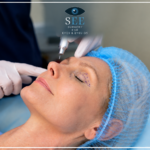
Cataract surgery is typically completed as an outpatient procedure and usually takes less than an hour.
The process generally includes:
- Applying local anaesthetic drops
- Creating tiny surgical openings
- Removing the cloudy natural lens
- Implanting the selected toric lens
- Checking lens positioning before completion
Most patients experience minimal discomfort during the procedure and return home the same day.
How Important Is Lens Positioning?
Toric lenses are designed to align with a specific axis inside the eye.
Proper positioning is critical because even small rotations can reduce the effectiveness of astigmatism correction. Surgeons use advanced imaging systems and precise marking techniques to ensure accurate placement.
This attention to detail contributes significantly to successful visual outcomes and patient satisfaction.
How Has Technology Improved Surgical Precision?
Eye surgery technology continues to advance rapidly.
Many practices now use sophisticated imaging systems and surgical planning tools to enhance accuracy. In selected cases, laser cataract treatment may be incorporated into the procedure to improve precision during certain surgical steps.
These innovations help create more predictable outcomes while supporting patient safety and comfort.
What Is Recovery Like After Surgery?
Most patients notice improvements in vision within a few days, although complete stabilisation may take several weeks.
During recovery, surgeons often recommend:
- Using prescribed eye drops
- Avoiding eye rubbing
- Wearing protective eyewear as advised
- Attending follow-up appointments
- Following activity restrictions when necessary
Recovery experiences vary, but most patients return to many normal activities relatively quickly.
What Results Can Patients Expect?
Visual outcomes depend on several factors, including eye health, surgical precision, and pre-existing conditions.
Many patients report:
- Sharper distance vision
- Reduced visual distortion
- Improved night vision
- Less dependence on glasses
- Greater confidence during daily activities
Individuals considering a toric IOL London option often choose it because of its ability to address two vision concerns in a single procedure.
While glasses may still be needed for certain tasks, many patients enjoy a significant improvement in their overall visual experience.
What Questions Should You Ask Your Eye Surgeon?
Being informed helps you make confident decisions about your care.
Consider asking:
- Am I a candidate for toric lenses?
- What degree of astigmatism do I have?
- What visual outcome can I realistically expect?
- Will I still need glasses afterwards?
- What risks and benefits should I consider?
Open communication with your surgeon can help align treatment decisions with your lifestyle and expectations.
How Can You Prepare for Better Long-Term Vision?
Successful surgery is only one part of maintaining healthy eyesight.
To support long-term vision health:
- Attend regular eye examinations
- Manage chronic health conditions
- Protect your eyes from UV exposure
- Follow medication instructions carefully
- Report any unusual symptoms promptly
These habits help preserve visual quality and support overall eye health for years to come.
Why Consider Modern Solutions for Cataracts and Astigmatism?
Living with blurry vision does not have to become a normal part of ageing. Advances in lens technology now allow many patients to address cataracts and astigmatism during one procedure. By exploring available options and working with experienced specialists, you can achieve a clearer vision and greater independence. At SEE, patients can learn more about personalised solutions that support lasting results following cataract treatment.
Key Takeaways:
- Cataracts and astigmatism can be corrected during the same procedure.
- Toric lenses are specifically designed to address astigmatism.
- Accurate measurements are essential for successful outcomes.
- Modern technology improves surgical precision and predictability.
- Many patients experience reduced dependence on glasses.
- Recovery is typically quick with proper post-operative care.
- Personalised treatment planning helps achieve the best visual results.
FAQs:
1. Does SEE recommend toric lenses for all cataract patients?
No. Toric lenses are typically recommended for patients who have cataracts along with measurable astigmatism. A detailed eye examination determines eligibility.
2. Will I still need glasses after toric lens implantation?
Some patients may still need glasses for certain activities, particularly reading or detailed close-up tasks, depending on their individual vision needs.
3. How long do toric intraocular lenses last?
Toric lenses are designed to remain inside the eye permanently and generally do not require replacement.
4. Is cataract surgery painful?
Most patients experience little to no pain during the procedure because local anaesthetic drops are used to keep the eye comfortable.
5. How soon can I return to normal activities after surgery?
Many patients resume light daily activities within a few days, although full recovery timelines vary based on individual healing and surgeon recommendations.