
Macular Hole
What is a Macular Hole?
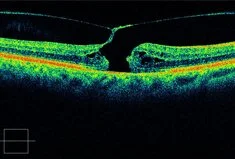
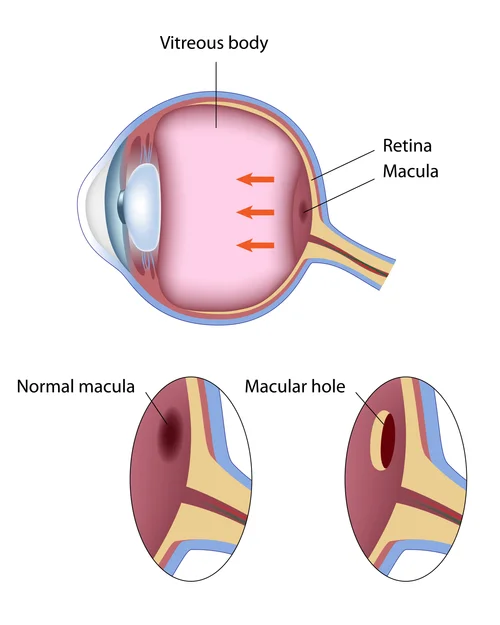
A macular hole is a hole in the centre of the retina. It happens in the most sensitive part of the retina and is important for seeing fine details as well as reading, seeing colours and recognising faces. The retina is the light-sensitive membrane at the back of the eye which sees the picture.
What are the symptoms of Macular Hole?
Patients experiencing a Macular hole may notice blurred vision, loss of central vision, and waviness of straight lines. For example, doorframes may appear crooked.
What causes Macular Hole?
The eye is filled with a jelly-like substance called vitreous. With time this may contract and pull on the Macula which causes it to tear and form a macular hole.
What is the treatment for a Macular Hole?
Various investigations and special scans can evaluate the extent and depth of the Macular Hole. Your surgeon will then advise you regarding the best course of macular hole treatment for your individual case. Macular Hole treatment may involve surgery.
Treatment Options for Macular Hole
Treatment for a macular hole depends on its size, severity and the effect it is having on your vision. Your ophthalmologist will assess the macula and recommend the most appropriate approach for you.
Observation and Monitoring
Some small or early macular holes may be monitored closely, particularly if they are having limited impact on your vision. Regular examinations and retinal imaging can help your ophthalmologist monitor any changes and determine whether treatment is needed.
Vitrectomy Surgery
For macular holes that are affecting vision, surgery may be recommended. A vitrectomy involves carefully removing the vitreous gel from inside the eye to relieve traction on the macula. A gas bubble is then placed inside the eye to support the macula while the hole heals.

Benefits of Macular Hole Treatment
- Improved central vision
- Clearer vision for reading and detailed tasks
- Reduced visual distortion
- Better ability to recognise faces and fine details
- Improved day-to-day visual function
- Support for maintaining independence in everyday activities
- Reduced impact of the macular hole on your quality of life
Who it helps / Suitability
A macular hole can affect your central vision, making everyday activities such as reading, recognising faces and seeing fine details more difficult. It most commonly develops with age as natural changes in the vitreous gel inside the eye place traction on the macula.
You may benefit from assessment and treatment for a macular hole if you are experiencing:
- Blurred or reduced central vision
- Straight lines appearing bent or distorted
- Difficulty reading or seeing fine details
Macular holes vary in size and severity, so treatment is tailored to each individual. A detailed eye examination and specialist retinal imaging can help determine the extent of the macular hole and whether treatment, including surgery, may be appropriate.
What to Expect
If surgery is recommended, your ophthalmologist will explain the procedure, expected recovery and any potential risks before treatment.
- Procedure
- Recovery
- Risks
Every patient’s recovery is different, and your ophthalmologist will guide you through each stage of the healing process. You’ll receive personalised advice and follow-up care to help monitor your recovery and vision.
Your expert ophthalmologist
Graham Duguid
Mr Duguid graduated in medicine from Aberdeen University and trained in ophthalmology in Glasgow, Melbourne, London, and Paris.
He specialises in medical and surgical diseases of the retina, cataracts, and ocular trauma. He is also experienced in medical management of glaucoma and general ophthalmic conditions.
Medical retinal disease includes diabetic retinopathy, age-related macular degeneration (wet and dry types), retinal vascular occlusions, sickle cell retinopathy, and myopic maculopathy. Surgical retinal disease includes retinal detachment, macular hole, epiretinal membrane, and advanced diabetic retinopathy. Mr. Duguid is also able to offer small-gauge vitrectomy.

Why choose SEE for Macular Hole Treatment?
We fully understand that you want the best treatment possible when it comes to Macular hole diagnosis and treatment. Rest assured, We at SEE specialise in surgical procedures and treatment for a vast number of retinal conditions with Macular Holes being one of them.
Our expert team of ophthalmic surgeons provide nothing but attention to detail but also strive to make sure you feel at ease by providing high quality patient care and personalised eye surgery.
Frequently Asked Questions
1. What is a macular hole?
A macular hole is a small opening that develops in the macula, the central part of the retina responsible for detailed, central vision. It can affect activities such as reading, recognising faces and seeing fine details.
2. What are the symptoms of a macular hole?
Common symptoms include blurred or distorted central vision, difficulty reading, and straight lines appearing wavy or crooked. Some people may also notice a small blind or dark spot in the centre of their vision.
3. What causes a macular hole?
Macular holes most commonly develop as part of the natural ageing process, when changes in the vitreous gel inside the eye place traction on the macula. They can also occur following an eye injury or certain other eye conditions.
4. Can a macular hole heal by itself?
Some very small macular holes may close without treatment, but many do not. Your ophthalmologist will assess the hole and recommend the most appropriate management based on its size, stage and effect on your vision.
5. How is a macular hole treated?
If treatment is required, surgery called a vitrectomy may be recommended. During the procedure, the vitreous gel is removed and a gas bubble may be placed inside the eye to help the macular hole close.
6. Can surgery improve vision after a macular hole?
Macular hole surgery can help the hole close and may improve central vision. The amount of visual improvement varies between patients and can depend on factors such as the size and duration of the hole.
7. How long does it take to recover from macular hole surgery?
Recovery varies from person to person. Your ophthalmologist will provide specific instructions about activities, positioning and follow-up appointments. Vision may continue to improve gradually over several weeks or months.
8. When should I see an ophthalmologist about a macular hole?
If you notice new distortion, blurred central vision, difficulty reading or changes in your central vision, you should arrange an eye assessment promptly. Early assessment can help determine the cause and whether treatment is needed.
Take the Next Step
If you have been diagnosed with a macular hole or are experiencing changes in your central vision, our specialist team can assess your condition and discuss the most appropriate treatment options for you.