
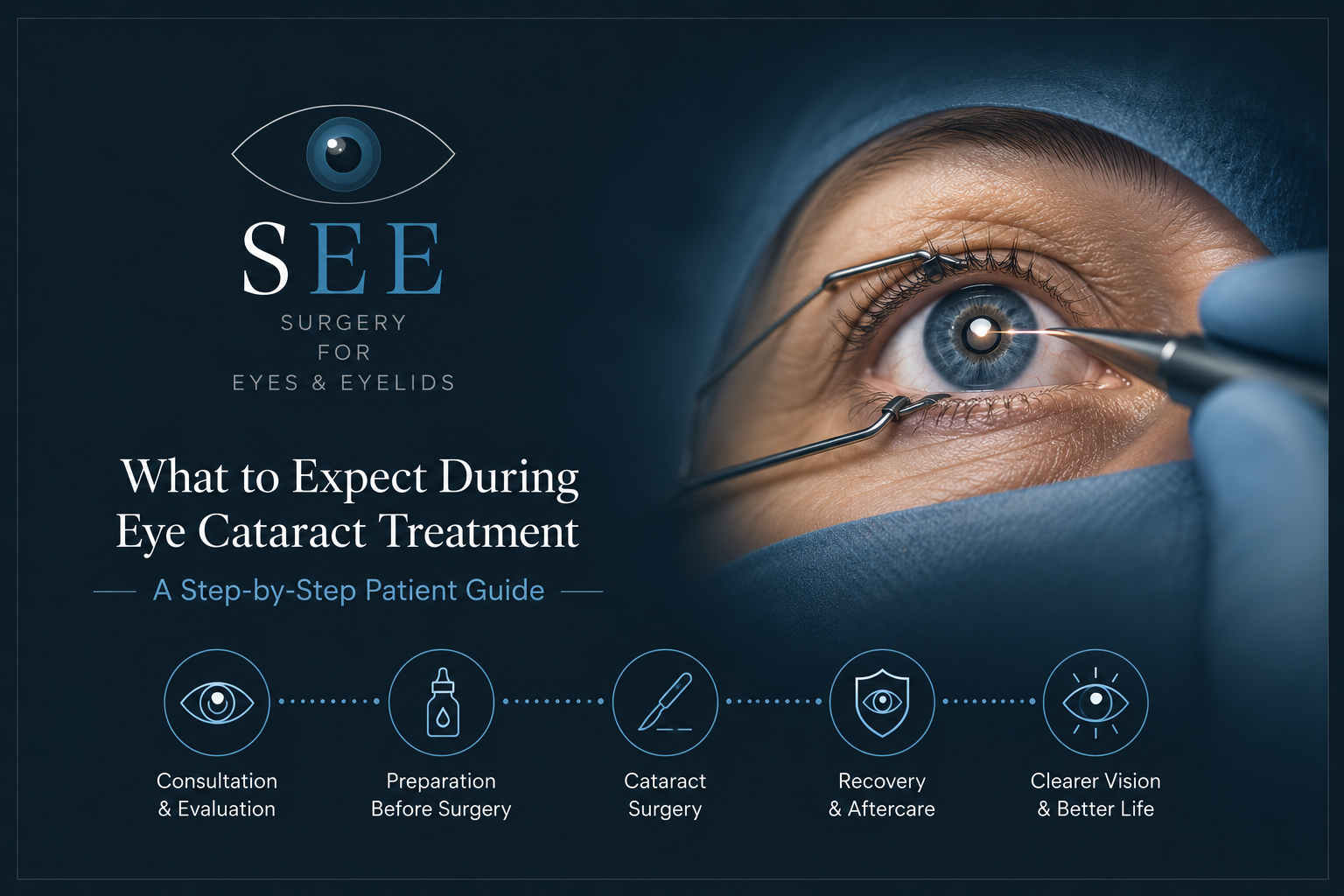
If you’ve been told you require eye cataract treatment recently, it’s quite normal to be a little frightened or unsure of what’s next. Cataracts are one of the top causes of clouded vision for persons over 60 years old. The good news is that modern science has made cataract repair safer and more successful than ever before. Today, eye cataract treatment is a common and very successful technique that restores clear eyesight and greatly improves quality of life. Whether you’re just starting to plan or your surgery date is near, this guide covers every step of the cataract surgery process, from your initial consultation to your last follow-up.
At Eyes and Eyelids, a team of experienced ophthalmic professionals commits to compassionate, expert-led treatment. No matter whether you have just begun planning or your surgery is almost upon you, this guide will take you through all the steps that will be involved with your cataract surgery.
Key Takeaways
- Cataract surgery is one of the most common and safest surgical treatments in the UK.
- This is usually done under a local anaesthetic and takes 15 to 30 minutes.
- Most patients see a dramatic improvement in vision within days of surgery.
- You will be awake during the process, but you will not feel any pain, simply some minor pressure.
- Be sure to follow your aftercare instructions very carefully for a smooth, speedy recovery.
What Occurs During Your First Consultation?
To start with, your ophthalmologist will conduct an extensive eye exam to verify whether you have cataracts or not. During this visit, the following should happen:
- Visual acuity testing to determine how well you see
- Slit lamp exam to determine the health condition of the lens inside your eye
- Measurements of your eye to know the power of the lens that will be implanted
- Evaluation of your general health and the medicines you take
- A complete explanation about the whole cataract surgery process
It is the right time to ask for explanations and clear all doubts. The doctor will walk you through all the cataract operation steps.
What Needs to Be Done Prior to Your Cataract Operation?
It is important to note that preparation is essential for a successful surgery. The following are what you should prepare for prior to undergoing your cataract surgery:
There has been increasing concern about cataract surgery waiting times in the UK over the last couple of years. As a consequence of the pandemic due to COVID-19, there is an increasing backlog within the NHS, leading to patients waiting beyond the time limit set by the government of 18 weeks. Some patients have been waiting for up to six months. While the NHS is working towards reducing these backlogs, it can be very frustrating for those who are losing their vision day by day.
What Actually Takes Place in the Operating Theatre?
A detailed understanding of the cataract surgery process will help ease one’s fears about the upcoming procedure. The following are clear steps detailing what transpires during the process:
Step 1: Eye Anaesthetic Drops
The local anaesthetic drops will be administered into your eye. The entire procedure is done while you are awake, but you will feel nothing in your eyes.
Step 2: Small Incision
The surgeon makes a self-healing incision on your cornea with stitch-free equipment, less than 3 mm long.
Step 3: Phacoemulsification
A special ultrasound probe will help break down the lens and remove it from your eye.
Step 4: Placement of the Intraocular Lens
This procedure entails insertion of an artificial lens (intraocular lens). The intraocular lens is usually folded for easy insertion back into the previously created incision.
Step 5: Covering the Eye
After the procedure, your eye closes up, and a shield is placed over the eye that you will take home.
What Are the Benefits of Private Cataract Surgery?
It makes the entire treatment more personalised, right from when to undergo surgery through to what technology will be used to conduct it. Some of the benefits of going for private cataract surgery include:
- Quick access: Private practices usually allow for consultation appointments within days or weeks and surgery itself in the same timeline.
- Selecting the correct surgeon: Your choice is based on the specialisation and experience of the doctor.
- Improved technology: Private hospitals use multifocal, EDOF, and toric intraocular lenses without requiring you to use corrective glasses.
- Convenience: The availability of your appointment time becomes easier and even includes weekends.
- Aftercare: Post-surgery care for patients who go through the surgery in private hospitals is much better.
- Stress-free surroundings: Private health institutions offer a stress-free environment.
Is Cataract Surgery Painful?
It is one of the most frequently asked questions, but the answer should make you relieved. Is cataract surgery painful? Of course not! The numbing eye drops make sure that you do not experience any pain, although you will feel some pressure or even the bright light from the laser during the operation.
However, it is very common for some patients to have mild pain or an itchy feeling after the surgery. It should disappear in 24-48 hours, and in most cases, pain medication such as paracetamol should be sufficient for you.
What Are the Results of Eye Cataract Recovery?
Eye cataract treatment is pretty fast, however, relaxing during the first week is crucial. The results include the following:
- Day 1: Blurriness or haziness of vision – it is natural since your eye gets used to changes
- Days 2–7: Improvement in vision sharpness and clarity in almost all cases
- Week 2-4: Final visual recovery stage when you might need new glasses fitted
- 6-8 weeks: Visit to your ophthalmologist to ensure full eye recovery
Do not rub, wash, and expose your eye to any dust during your recovery period. Use recommended eye drops as prescribed.
What Potential Risks or Side Effects Are There?
Like all surgeries, there is always some risk associated with the eye cataract treatment, although major risks are very uncommon. Knowing about the possible side effects can help you monitor your progress and know when to seek medical help. Possible side effects include:
- Posterior capsule opacification: This is the most prevalent side effect that occurs weeks or months after the procedure, where the lens capsule becomes cloudy. This can be easily treated using a painless laser therapy.
- Infection: While extremely rare, endophthalmitis is a condition where a patient develops an infection and should contact the surgeon right away. Symptoms may include severe pain, redness, and declining vision.
- Increase in eye pressure: Temporary increase in the intraocular pressure can occur, which will be treated using drops for the eyes.
- Floaters: Some degree of floaters is common in patients, but this symptom fades in a couple of weeks after the procedure.
- Dry eyes: Dryness of the eyes is a frequent complication after the surgery and can be alleviated using lubricating eye drops.
Cataracts Can’t Cloud Your Vision
Here at The SEE Clinic, our professional team provides you with both the highest levels of professionalism and a patient-focused attitude towards service provision. Regardless of whether you would like to learn more on how to go about your cataract operation or want to book an appointment for the surgery, their skilled doctors will be by your side all the way.
Frequently Asked Questions.
How long does the surgery take?
The surgery normally takes from 15 to 30 minutes.
Is the surgery painful?
No, you will not feel any pain due to the anaesthetic applied to your eyes; you may only feel pressure sensations during the process.
How soon after surgery am I able to drive?
After your doctor gives you permission since your vision is clear enough for safe driving, you may start driving one to two weeks later.
Am I supposed to wear glasses after my surgery?
Whether you will require wearing glasses will depend on the lens implant you select.
Do cataracts come back after being surgically removed?
No, the new lens does not have cataracts, although some patients suffer from blurred lenses.