Vision changes can feel confusing when more than one eye condition develops together. Many people notice blurry vision, trouble reading, faded colors, or difficulty driving at night without knowing the exact cause. The good news is that proper diagnosis and timely care can help protect eyesight and improve daily comfort.
When cataracts and age-related macular degeneration happen together, doctors create a treatment plan based on your vision needs, eye health, and disease stage. In many cases, early care and modern procedures help patients continue enjoying daily activities with clearer vision through effective eye cataract treatment.
Why Do Cataracts and AMD Often Happen Together?
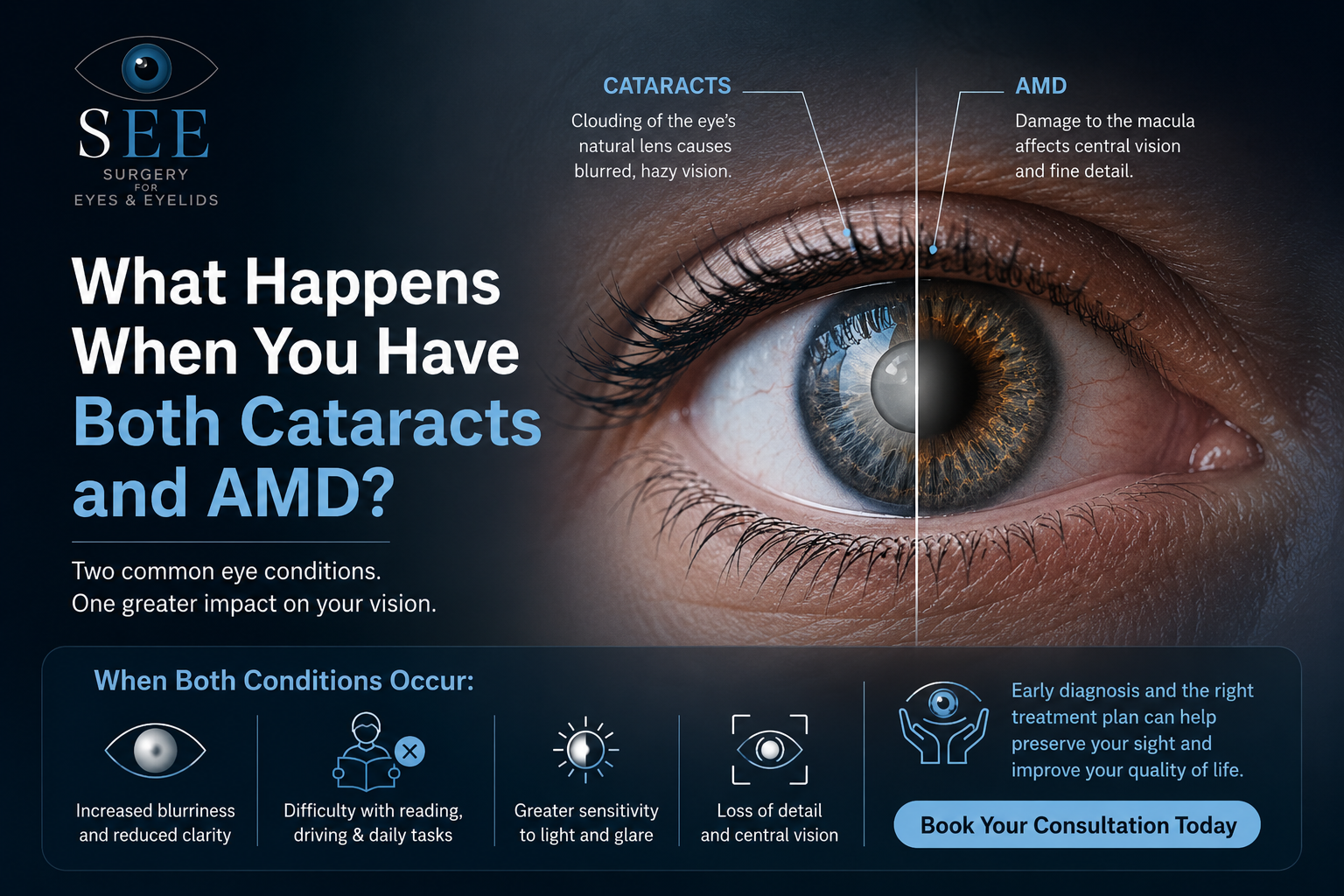
Both cataracts and AMD become more common with age. While they affect different parts of the eye, they can appear at the same time in older adults.
- Cataracts cloud the natural lens of the eye.
- AMD damages the macula, the central part of the retina.
- Both conditions slowly reduce visual clarity.
- Symptoms may overlap and confuse patients initially.
- Regular eye exams help detect both conditions earlier.
People may first think they only need stronger glasses. However, if symptoms continue worsening, a complete eye examination becomes extremely important.
How Do Cataracts and AMD Affect Vision Differently?
Understanding the difference helps patients know why their vision changes feel more complex.
Cataracts Usually Cause Cloudy Vision
Cataracts commonly lead to:
- Blurred or foggy eyesight
- Glare from headlights
- Faded colors
- Poor night vision
- Frequent prescription changes
Many patients describe cataracts as looking through a dirty window.
AMD Mainly Affects Central Vision
AMD often impacts activities requiring sharp focus, including:
- Reading text
- Recognizing faces
- Driving safely
- Seeing fine details
- Using digital screens comfortably
Some patients receiving macular degeneration treatment still experience visual difficulties because cataracts continue blocking light from entering the eye.
Can You Still Have Cataract Surgery If You Have AMD?
Yes, many people with AMD still benefit from cataract surgery. However, results depend on the severity and type of AMD.
Doctors carefully evaluate:
- Retina health
- Stage of AMD
- Vision goals
- Overall eye condition
- Expected visual improvement
Modern cataract treatment surgery often improves brightness, reduces glare, and enhances overall visual quality even if AMD remains present.
What Symptoms Should You Watch Carefully?
Having both conditions may create combined symptoms that worsen gradually over time.
Signs That Should Never Be Ignored
- Straight lines appear wavy
- Increased sensitivity to light
- Difficulty recognizing faces
- Dark or blank central spots
- Trouble adjusting between lighting conditions
If symptoms suddenly worsen, immediate medical attention is important.
How Do Eye Specialists Diagnose Both Conditions?
Eye doctors use several tests to examine different parts of the eye carefully.
Common Diagnostic Tests Include
- Dilated eye examination
- Retinal imaging scans
- Visual acuity testing
- Optical coherence tomography
- Amsler grid testing
These tests help doctors understand how much each condition contributes to vision loss.
What Happens During Cataract Surgery With AMD?
Many patients worry that surgery could worsen AMD. In most cases, careful monitoring and advanced surgical techniques help reduce risks.
What Patients Can Usually Expect
- Removal of the cloudy lens
- Placement of an artificial lens
- Short outpatient procedure
- Minimal discomfort afterward
- Gradual vision improvement over weeks
Patients with mild or moderate AMD often notice better brightness and sharper overall vision after surgery.
Some people still need glasses or additional retinal care after the procedure.
Does Cataract Removal Cure AMD?
No, cataract surgery does not cure AMD because both conditions affect different eye structures.
Cataract surgery removes the cloudy lens, while AMD continues to affect the retina. Patients may see visual improvement after surgery, but AMD management remains essential.
This is why ongoing retinal monitoring matters even after successful eye cataract treatment.
What Lifestyle Changes Can Help Protect Vision?
Healthy habits play a major role in slowing vision decline and supporting eye health.
Daily Habits That Support Better Eye Health
- Wear UV-protective sunglasses outdoors
- Eat leafy green vegetables regularly
- Stop smoking completely
- Control blood pressure carefully
- Schedule routine eye exams consistently
Small changes often help reduce strain and support long-term eye function.
Which Foods Support Eye Health Naturally?
Nutrition becomes especially important for people managing multiple eye conditions.
Helpful Nutrients for Eye Support
- Omega-3 fatty acids
- Vitamin C-rich fruits
- Zinc-containing foods
- Lutein and zeaxanthin
- Colorful vegetables and berries
A balanced diet supports retinal health and overall wellness naturally.
How Does AMD Severity Affect Surgical Results?
Not every patient experiences the same outcome after surgery. The stage of AMD strongly influences expected improvements.
Mild AMD Cases
Patients often notice:
- Brighter vision
- Reduced glare
- Better color contrast
- Easier reading ability
- Improved daily comfort
Advanced AMD Cases
Vision improvement may remain limited because retinal damage already exists. However, surgery can still improve overall visual quality and light perception.
Doctors discuss realistic expectations before recommending surgery.
What Questions Should You Ask Your Eye Doctor?
Open communication helps patients feel more confident about treatment decisions.
Important Questions to Discuss
- How advanced is my AMD?
- Will surgery improve my daily activities?
- What risks should I understand?
- How long is recovery expected?
- What follow-up care will I need?
Understanding your condition helps reduce anxiety and improve treatment planning.
How Long Does Recovery Usually Take?
Recovery varies from person to person, depending on overall eye health and AMD severity.
Typical Recovery Experience
- Mild irritation for a few days
- Improved brightness within weeks
- Follow-up appointments after surgery
- Temporary use of eye drops
- Gradual adjustment to vision changes
Patients should avoid heavy lifting and follow all aftercare instructions carefully.
Can Vision Still Decline After Surgery?
Yes, AMD may continue progressing over time even after successful cataract surgery.
This is why retinal monitoring remains extremely important. Ongoing care may include:
- Retinal injections
- Vision monitoring tools
- Nutritional support
- Low vision aids
- Lifestyle adjustments
Some patients receiving cataract treatment surgery later require additional retinal treatments to preserve remaining central vision.
How Can Family Members Help Someone Managing Both Conditions?
Emotional and practical support can make daily life easier for patients.
Helpful Ways Family Members Can Assist
- Improve home lighting
- Reduce fall hazards
- Attend appointments together
- Encourage medication reminders
- Support healthy lifestyle habits
Small acts of support often improve confidence and independence significantly.
Why Early Detection Matters So Much?
Many people ignore vision changes until daily tasks become difficult. Early diagnosis allows doctors to begin treatment before severe damage develops.
Routine eye examinations help detect:
- Early cataracts
- Dry AMD progression
- Wet AMD warning signs
- Retinal changes
- Other age-related eye diseases
Patients who receive timely care often maintain better long-term visual function.
How SEE Supports Better Eye Care Decisions?
At The SEE Clinic, patient education and early diagnosis remain essential parts of protecting long-term vision. Understanding both conditions clearly helps individuals make informed treatment choices with greater confidence.
Whether symptoms are mild or advanced, personalized care plans and regular monitoring help improve quality of life through modern eye cataract treatment options tailored to individual needs.
Key Takeaways:
- Cataracts and AMD commonly occur together in aging adults.
- Cataracts cloud the lens, while AMD damages central retinal vision.
- Cataract surgery may still improve brightness and visual clarity.
- AMD does not disappear after cataract surgery.
- Healthy lifestyle habits support long-term eye health.
- Early diagnosis improves treatment outcomes significantly.
- Regular eye examinations remain essential for monitoring progression.
- SEE encourages proactive care and personalized vision management.
Frequently Asked Questions.
Can cataracts make AMD symptoms feel worse?
Yes, cataracts can increase blurriness and glare, making AMD-related vision problems more noticeable.
Is cataract surgery safe for AMD patients?
Most AMD patients safely undergo surgery after careful retinal evaluation and professional medical guidance.
Will surgery fully restore vision if I have AMD?
Results depend on AMD severity because retinal damage may still limit central vision clarity afterward.
How often should AMD patients schedule eye exams?
Most specialists recommend regular yearly exams, though advanced cases may require more frequent monitoring.
Why should patients choose SEE for vision care support?
SEE focuses on personalized evaluations, patient education, and advanced care for complex vision conditions.