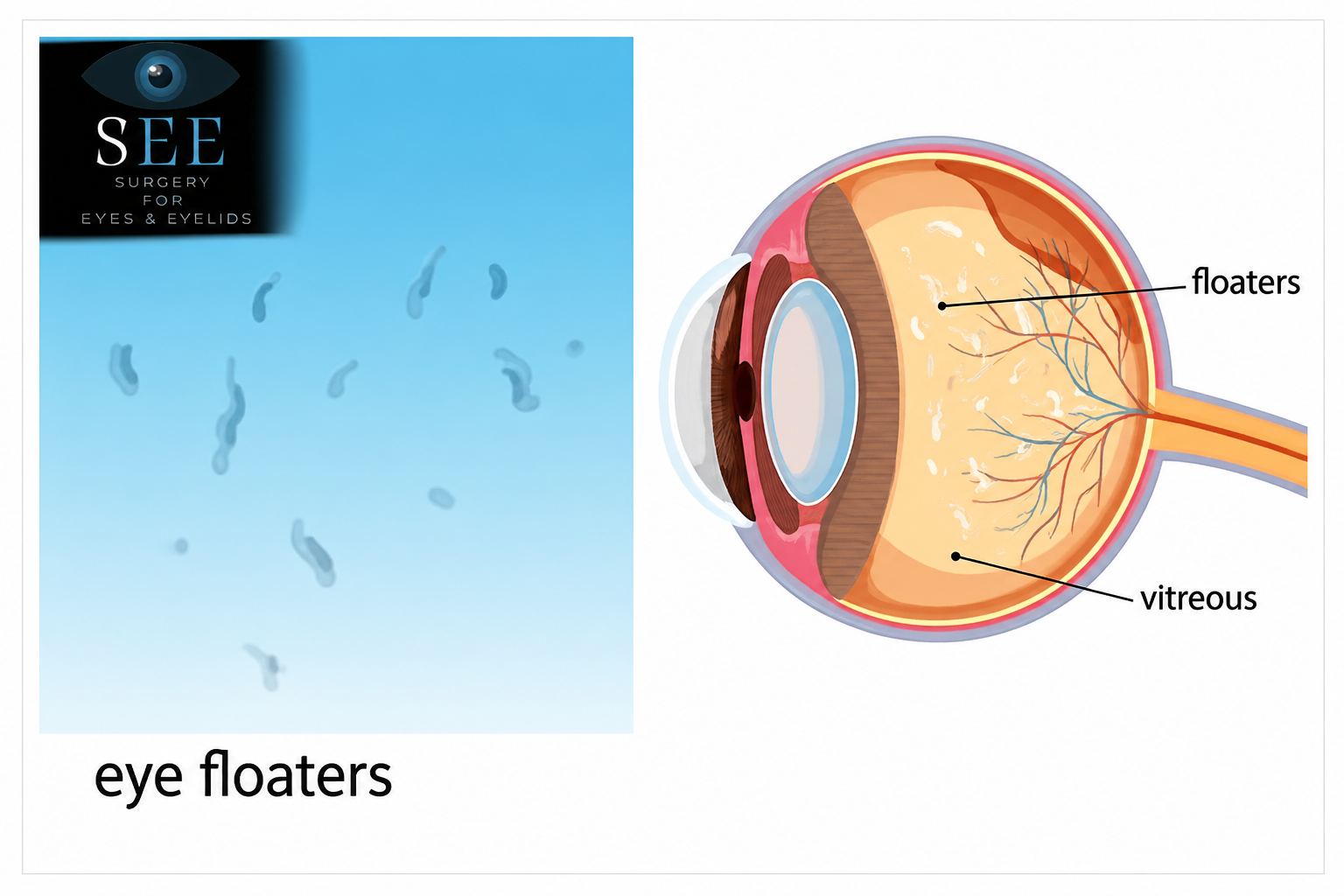
Are you noticing small spots, lines, or shapes moving across your vision? Also known as myodesopsias or muscae volitantes, eye floaters are common visual symptoms that can appear as small shapes in the field of vision. Not only can they be distracting, but they may also affect clear vision.
They may look like black dots, strands, spiders, or cobwebs. Floaters are caused by changes in the vitreous, the clear jelly that fills the inside of the eye.
Many floaters are linked to normal changes that happen with age. However, new or sudden floaters can sometimes be linked to a retinal tear or another eye problem. Knowing the common causes and warning signs can help you know when to get your eyes checked.
5 Common Causes of Eye Floaters
Eye floaters can happen for several reasons. Age-related changes are the most common cause, but other eye conditions can also lead to floaters.
Here are five common causes of eye floaters.
Age-Related Changes
As the eyes age, the vitreous jelly can start to shrink and become more liquid. The jelly may also form strands or clumps. These can cast small shadows on the retina and appear as floaters in your vision.
Age-related changes in the vitreous are the main cause of eye floaters. Many people may notice them as they get older. While they can be annoying, floaters are often harmless when there is no damage to the retina.
Short-Sightedness
Short-sightedness, also called myopia, can increase the chance of developing eye floaters. People with short-sightedness may experience changes in the vitreous at a younger age.
These changes can cause strands or other shapes to become visible in the field of vision. New floaters should still be checked to make sure there is no problem with the retina.
Posterior Vitreous Detachment
The vitreous can pull away from the retina as the eye changes with age. This is known as posterior vitreous detachment. It can lead to a sudden increase in floaters.
When the vitreous pulls on the retina, it may sometimes cause a retinal tear. This is why new floaters should not be ignored, especially when they appear suddenly or with other changes in vision.
Eye Injury or Inflammation
An injury to the eye can affect the vitreous and may lead to new floaters. Inflammation inside the eye can also cause changes that make floaters more noticeable.
Floaters that appear after an eye injury or along with pain, redness, or changes in vision should be checked by an eye specialist. Finding the cause can help guide the right treatment.
Bleeding Inside the Eye
Bleeding into the vitreous can cause dark spots or floaters in the field of vision. Diabetes is one condition that can cause bleeding inside the eye.
Other eye problems can also lead to bleeding. Since blood inside the vitreous can affect vision and may point to an underlying eye problem, it is important to have it checked.
How to Treat Eye Floaters
Treatment for eye floaters depends on what is causing them and whether they are affecting the retina or vision. Many harmless floaters do not need treatment and may become less noticeable over time.
Here are four ways eye floaters may be managed or treated.
Monitoring the Floaters
When floaters are caused by normal changes in the vitreous and there is no retinal tear, treatment may not be needed. Many people gradually become less aware of their floaters.
An eye check can help confirm that the retina is healthy. Your eye specialist can also advise whether further checks are needed.
Treating a Retinal Tear
A retinal tear can occur when the vitreous pulls on the retina. If a tear is found, treatment may be needed to reduce the risk of retinal detachment.
A retinal tear is a serious eye problem because it can progress to retinal detachment and lead to severe loss of vision. A prompt eye check can help find a tear before it causes further damage.
Treating the Underlying Cause
When floaters are caused by bleeding, inflammation, or another eye condition, treatment focuses on the cause.
For example, if bleeding is linked to an eye condition such as diabetes, that condition may need to be treated. The right approach will depend on what the eye specialist finds during the examination.
Surgery for Severe Floaters
Most people with harmless floaters do not need surgery. However, treatment may be considered when floaters are very troublesome and continue to affect vision or daily activities.
A retinal specialist can assess the severity of the floaters and decide whether treatment is suitable.
When to Get Help for Eye Floaters?
Many eye floaters are harmless, but sudden changes can sometimes be a warning sign of a retinal problem. Getting an eye check can help find the cause and rule out a retinal tear.
Here are some signs that need prompt eye care.
Sudden Increase in Floaters
A sudden increase in the number of floaters should be checked by an eye specialist. This can happen when the vitreous pulls on the retina.
In some cases, this may cause a retinal tear. An eye examination can help check the retina and identify any damage.
Flashes of Light
Flashes of light can occur when the vitreous pulls on the retina. When flashes appear with new floaters, they should be checked promptly.
An eye specialist can examine the retina to look for a tear or other changes that may need treatment.
A Dark Curtain or Shadow
A dark curtain, shadow, or missing area in your vision can be a warning sign of retinal detachment. This is a serious condition that needs urgent treatment.
Do not wait for this type of vision change to settle on its own. Seek urgent eye care if a dark curtain or shadow appears in your vision.
Sudden Changes in Vision
New floaters along with sudden blurred vision or reduced vision should not be ignored. These changes may point to a problem with the retina or another part of the eye.
An eye specialist can dilate the pupils and examine the whole retina to look for a retinal tear.
Frequently Asked Questions
Are eye floaters normal?
Eye floaters are common and are often caused by age-related changes in the vitreous. They are usually not harmful when there is no retinal tear or other eye problem. However, new or sudden floaters should be checked.
What causes eye floaters?
Age-related changes in the vitreous are the main cause of eye floaters. Short-sightedness, eye injury, inflammation, and bleeding inside the eye can also cause floaters.
Can eye floaters go away on their own?
Many harmless floaters become less noticeable over time. The brain may gradually adjust to them. However, a new or sudden change in floaters should still be checked to rule out a retinal problem.
Are sudden eye floaters dangerous?
Sudden eye floaters are not always dangerous, but they can be a sign of a retinal tear. This is more concerning when they appear with flashes of light, a dark curtain, or sudden changes in vision. Prompt eye care is important.
Conclusion
Eye floaters can be caused by normal age-related changes in the vitreous, short-sightedness, eye injury, inflammation, or bleeding inside the eye. While many floaters are harmless, a sudden increase in floaters or changes such as flashes, a dark curtain, or reduced vision can point to a serious retinal problem.
Are you experiencing new eye floaters or changes in your vision? The SEE Clinic provides specialist eye care to assess floaters, check the retina, identify the cause, and advise on suitable treatment.