Objective:
Help readers understand what causes hooded eyes, how blepharoplasty for hooded eyes corrects it, and what to expect from consultation through to final results, so they can decide with confidence whether upper eyelid surgery at The SEE Clinic is right for them.
Key Takeaways
- Blepharoplasty for hooded eyes removes the excess skin folding over the lid, opening up the eye and, in some cases, improving vision.
- Also called upper eyelid surgery, it’s usually done under local anaesthetic in under an hour.
- Recovery takes about a week for the obvious signs to fade. Full results settle over six to eight weeks.
- Hooding isn’t the same as a droopy eyelid, though the two sometimes overlap.
- At The SEE Clinic, upper blepharoplasty is performed by consultant oculoplastic surgeons, not general cosmetic practitioners.
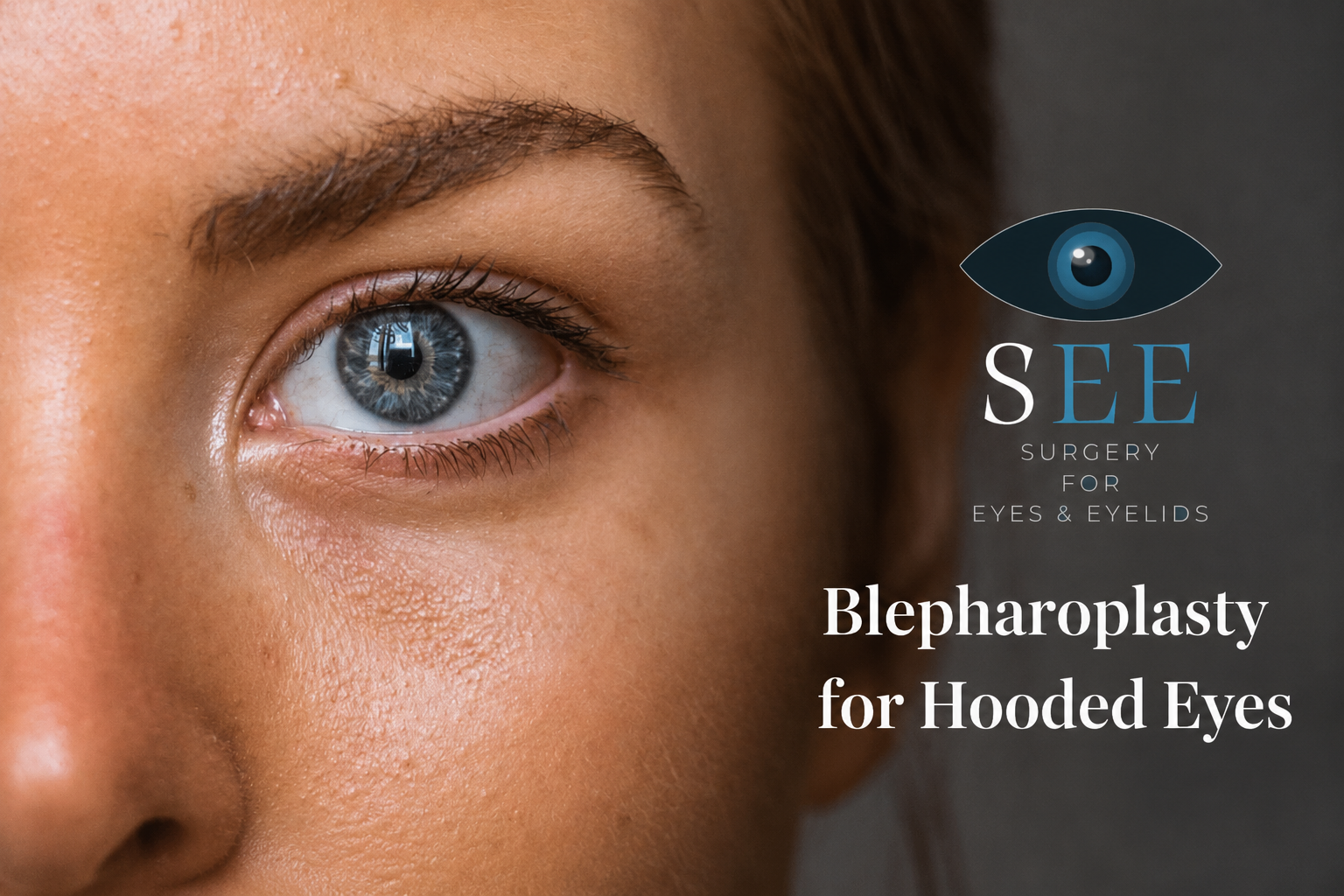
You catch it in a photo before you notice it in the mirror. Eyes that look smaller than they should, a fold sitting where your eyelid crease used to be, a permanently tired expression no matter how much sleep you got. That’s hooding, and it’s one of the most common reasons people book a consultation with us.
Blepharoplasty for hooded eyes deals with this directly. It’s not new, and it’s not cosmetic guesswork. It’s a well-established procedure, and the results hold up far better when the surgeon operating on your eyelid actually specialises in eyes.
What Causes Hooded Eyes
Some people are born with it. A lower brow position or thicker eyelid skin can create hooding from your twenties onward. For most, though, it develops with age, as skin loses collagen and the muscles holding your brow in place weaken.
Common contributors:
- Inherited eyelid and brow shape
- Natural collagen loss over time
- Sun exposure, which speeds up skin laxity
- Weakened forehead muscles
- General skin ageing
People often mix up hooding with under-eye puffiness. They’re not related. Puffiness is below the eye and comes from fat or fluid. Hooding sits above the eye and comes from excess skin.
How Blepharoplasty Fixes It
Upper blepharoplasty removes the loose skin causing the overhang. The incision follows your natural eyelid crease, so once healed, the scar hides in a line that’s already there when your eyes are open.
Roughly how it goes:
- The surgeon marks exactly how much skin needs to come off, leaving enough that your eyelid still closes properly.
- Local anaesthetic goes in, with sedation as an option if you’d prefer it.
- The marked skin is removed along the crease line.
- Fat is trimmed or repositioned if it’s adding to the heaviness.
- Fine sutures close the incision.
This is why it’s also called upper eyelid blepharoplasty. It’s separate from lower lid surgery, which deals with bags, not hooding.
Hooding vs a Droopy Eyelid
Are hooded eyes and a droopy eyelid the same thing?
No. Hooding is excess skin. A droopy eyelid, or ptosis, is a weak muscle. Different problem, different fix.
| Upper Blepharoplasty | Ptosis Repair | |
| Treats | Excess skin over the crease | Weak lid-lifting muscle |
| Cause | Ageing, genetics, sun damage | Muscle weakness, nerve issues |
| Vision effect | Helps if skin blocks the eye | Helps if the lid itself sits too low |
Some patients need both done at once, and your surgeon will flag that during consultation if it applies to you.
Recovery, Week by Week
How long before I look normal again?
Most people feel comfortable in public within 7 to 10 days.
- Days 1–3: Swelling and bruising are at their worst. Cold compresses and sleeping propped up help.
- Days 4–7: Bruising fades fast. Light makeup usually covers the rest by day 7.
- Week 2: Stitches come out if needed. Most people are back at their desk by now.
- Weeks 3–6: Swelling keeps easing. The crease starts looking like it belongs there.
- Weeks 6–8: This is the real result. Everything before this is still healing.
Hold off on exercise until your surgeon gives the go-ahead, usually around week two or three.
What Results Actually Look Like
Will I look like a different person?
No, and that’s the point. You’ll look like a rested version of yourself, not a new one.
What changes:
- A visible crease where there wasn’t one before
- Eyes that open more, especially at the outer corner
- Makeup finally sits properly again
- Better peripheral vision, if skin was blocking it before
Scarring sits in the crease itself and fades to almost nothing within a few months.
Are You a Good Candidate
You’re likely a good fit for blepharoplasty surgery if you have:
- Visible skin folding over the lash line
- No uncontrolled health conditions affecting healing
- Realistic expectations about what surgery can and can’t change
- Willingness to pause smoking around the procedure, since it slows healing
If hooding is proven to affect your vision, your insurance may cover part of the cost. That gets confirmed during your assessment, not guessed at beforehand.
FAQs
Does it hurt?
It’s more tightness and soreness than pain. Painkillers you can buy at a pharmacy usually cover it.
How long do results last?
Ten to fifteen years, often longer. Ageing continues either way, but the reset holds.
Can hooding come back?
Removed skin doesn’t return, but surrounding skin keeps ageing. Some hooding can reappear decades later, rarely to the same degree.
How much time off work do I need?
One to two weeks, mostly down to how visible bruising is and how comfortable you feel being seen.
Is it covered by insurance?
Sometimes, if it’s affecting your vision and your surgeon documents that. Purely cosmetic cases are usually self-funded.
Book a Consultation
Hooded eyes aren’t only a cosmetic issue. For a lot of patients, they’re a daily reminder of looking tired, and in more advanced cases, a real limit on what they can see. Blepharoplasty for hooded eyes fixes both.
At The SEE Clinic on Harley Street, upper eyelid surgery is carried out by consultant oculoplastic surgeons who know eyelid anatomy inside out. Book a consultation to find out if it’s right for you.