Your central vision controls the moments that matter most. It helps you read messages, recognize faces, drive safely, and enjoy everyday details. When Age-Related Macular Degeneration begins damaging the macula, these activities slowly become harder. Early attention and proper care can help protect vision before permanent damage develops. Many people today explore AMD age related macular degeneration treatment options to slow progression and maintain independence.
At SEE, patients often learn that AMD develops gradually, making early symptoms easy to ignore. Slight blurriness, faded colors, or difficulty reading in dim lighting may seem harmless initially. However, these warning signs can indicate serious macular damage already beginning inside the retina.
Why Is the Macula So Important for Vision?
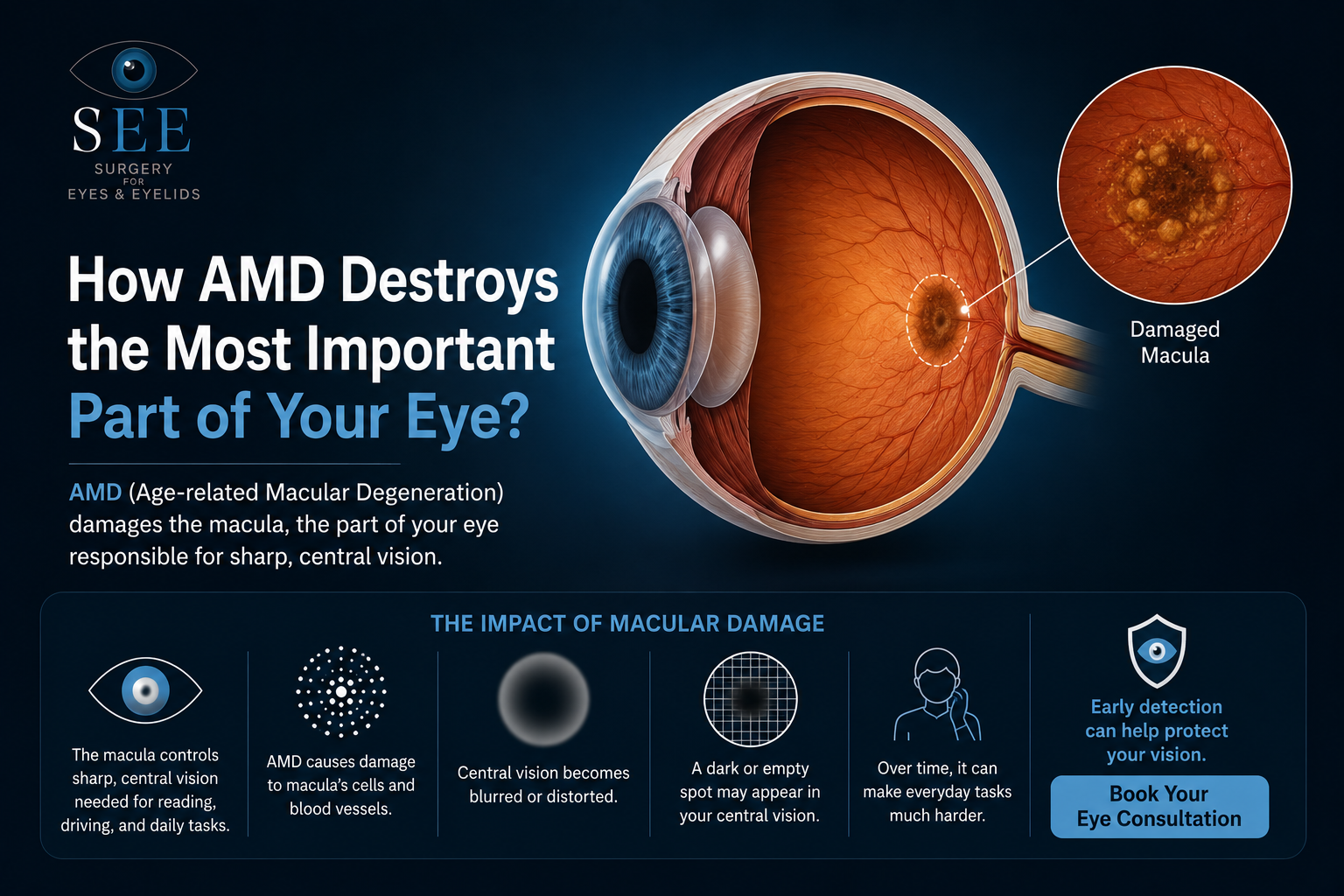
The macula is the small central area of the retina responsible for sharp, detailed vision. Although tiny in size, it handles the most visually demanding tasks throughout the day.
Without a healthy macula, people may struggle with:
- Reading books or digital screens
- Seeing facial expressions clearly
- Driving safely at night
- Distinguishing colors and contrast
- Performing close-up work comfortably
Peripheral vision may remain normal for years, but central vision becomes increasingly distorted as AMD advances.
What Actually Happens During AMD?
AMD slowly damages light-sensitive retinal cells within the macula. Over time, these cells stop functioning properly and begin deteriorating permanently.
Two main forms of AMD affect vision differently:
- Dry AMD
Dry AMD develops gradually and is the most common type. Small protein deposits called drusen accumulate beneath the retina, disrupting healthy retinal function.
Symptoms may include:
- Blurred central vision
- Difficulty reading
- Increased need for brighter lighting
- Trouble adapting to darkness
- Distorted straight lines
Many patients seek AMD disease treatment after noticing these changes interfering with daily life.
- Wet AMD
Wet AMD is more aggressive and can cause rapid vision loss. Abnormal blood vessels grow beneath the retina and leak fluid or blood into the macula.
This may lead to:
- Sudden blurry spots
- Severe visual distortion
- Dark central blind areas
- Rapid decline in reading ability
Immediate care becomes critical once wet AMD develops.
How Does AMD Destroy Central Vision?
AMD targets the cells responsible for processing detailed visual information. As these cells deteriorate, the brain receives incomplete or distorted images.
Patients may notice:
- Words appear missing while reading
- Straight lines looking wavy
- Faces are becoming difficult to recognize
- Colors appearing faded
- Central blind spots are developing gradually
The damage often starts subtly but worsens progressively without intervention.
What Causes AMD to Progress Faster?
Several lifestyle and health factors increase the risk of severe macular damage.
- Smoking: Smoking significantly reduces oxygen supply to retinal tissues and accelerates cellular damage.
- Aging: The risk rises naturally with age, especially after 60 years old.
- Poor Diet: Low intake of antioxidants and nutrients weakens retinal protection over time.
- Family History: Genetics may increase the likelihood of developing AMD earlier.
- High Blood Pressure: Poor circulation can damage delicate retinal blood vessels.
Making healthier lifestyle choices may help slow disease progression.
What Early Symptoms Should Never Be Ignored?
Many people delay eye exams because AMD often begins painlessly. Recognizing symptoms early may help preserve useful vision longer.
Watch for warning signs such as:
- Blurred central vision
- Difficulty reading small print
- Distorted straight lines
- Needing brighter light indoors
- Dark spots in central vision
- Colors appear less vibrant
Early diagnosis allows specialists to recommend suitable management options sooner.
How do Eye Specialists diagnose AMD?
Complete retinal examinations help detect AMD before major vision loss occurs.
Common diagnostic tools include:
- Dilated Eye Examination
Special eye drops widen the pupils, allowing detailed retinal evaluation.
- Optical Coherence Tomography (OCT)
This scan creates detailed retinal images showing swelling or tissue damage.
- Amsler Grid Testing
Grid patterns help identify visual distortions affecting central vision.
- Fluorescein Angiography
Dye imaging reveals abnormal blood vessel growth associated with wet AMD.
These evaluations help specialists determine disease severity and monitor progression carefully.
Can Vision Loss From AMD Be Reversed?
Unfortunately, damaged retinal cells usually cannot regenerate naturally. However, treatment may help preserve remaining vision and slow further deterioration.
Management focuses on:
- Slowing disease progression
- Reducing retinal swelling
- Improving visual function
- Preventing additional damage
- Supporting daily visual independence
The earlier treatment begins, the better the chances of maintaining functional eyesight.
Which Treatments Help Slow AMD Progression?
Several modern therapies help manage AMD depending on the disease stage and type.
- Anti-VEGF Injections: These medications reduce abnormal blood vessel growth in wet AMD and help stabilize vision.
- Nutritional Support: Certain vitamins and antioxidants may support retinal health in dry AMD.
- Laser Therapy: Specific laser procedures may help seal leaking blood vessels.
- Lifestyle Adjustments: Healthy habits often play an important role in protecting long-term eye health.
Some patients explore eye macular degeneration treatment strategies alongside regular retinal monitoring to help preserve daily visual activities.
How Does Diet Affect Macular Health?
Nutrition directly impacts retinal function and cellular protection.
Foods supporting macular health include:
- Leafy green vegetables
- Salmon and oily fish
- Citrus fruits
- Nuts and seeds
- Eggs are rich in lutein
- Colorful vegetables
Helpful nutrients may include:
- Zinc
- Vitamin C
- Vitamin E
- Omega-3 fatty acids
- Lutein and zeaxanthin
Balanced nutrition supports overall retinal resilience as people age.
Can Lifestyle Changes Protect Vision Longer?
Although AMD cannot always be prevented completely, healthier habits may reduce progression risk.
- Stop Smoking
Smoking remains one of the strongest preventable AMD risk factors.
- Wear UV-Protective Sunglasses
Sun exposure may contribute to retinal stress over time.
- Manage Blood Pressure
Healthy circulation supports retinal tissue health.
- Exercise Regularly
Physical activity promotes improved blood flow and overall wellness.
- Schedule Regular Eye Exams
Routine retinal evaluations help identify changes early.
Consistency matters greatly when managing long-term eye health conditions.
Why Is Emotional Health Also Affected by AMD?
Vision loss impacts more than eyesight alone. Many people experience emotional stress as everyday activities become difficult.
Patients may struggle with:
- Loss of independence
- Anxiety about worsening vision
- Difficulty driving
- Reduced social confidence
- Challenges reading or working
Support from specialists, family members, and low-vision resources often improves quality of life significantly.
How Can Patients Adapt to Vision Changes?
Modern visual aids and practical adjustments can help patients maintain independence longer.
Helpful strategies include:
- Using brighter indoor lighting
- Increasing screen text size
- Using magnification tools
- Improving home contrast visibility
- Reducing glare indoors
- Organizing living spaces carefully
Low-vision rehabilitation programs may also improve daily functioning.
What Makes Early Treatment So Important?
AMD damage becomes harder to control once retinal cells die permanently. Early detection creates more opportunities to preserve useful central vision.
Benefits of prompt care may include:
- Slower disease progression
- Better long-term visual function
- Reduced risk of severe blindness
- Improved treatment response
- Greater daily independence
At The SEE Clinic, patients are encouraged to seek retinal evaluations whenever visual changes appear unusual or persistent.
Key Takeaways:
- AMD damages the macula, the retina’s central vision area.
- Central vision loss affects reading, driving, and facial recognition.
- Dry AMD progresses slowly, while wet AMD may worsen rapidly.
- Early symptoms often include blurry or distorted central vision.
- Healthy lifestyle choices may help protect retinal health.
- Early diagnosis improves long-term management possibilities.
- Regular retinal exams remain essential after age 60.
- Modern therapies may slow progression and preserve useful vision.
- Nutritional support can contribute to healthier retinal function.
- Exploring AMD age related macular degeneration treatment early may help maintain independence longer.
Frequently Asked Questions.
What is the first symptom of AMD?
Early symptoms commonly include blurry central vision, distorted lines, and difficulty reading small print.
Can AMD cause complete blindness?
AMD usually affects central vision rather than total blindness, though severe cases greatly reduce independence.
Is wet AMD more dangerous than dry AMD?
Yes, wet AMD progresses faster and may cause sudden central vision loss without prompt treatment.
How often should AMD patients get eye examinations?
Most specialists recommend regular monitoring schedules depending on disease severity and progression risk.
Can SEE help with retinal evaluations?
Yes, SEE provides professional eye assessments and guidance for patients experiencing AMD-related visual concerns.