
Last Updated: November 28, 2026
Quick Summary
Multifocal lens night vision problems usually mean halos and glare around lights, a known trade-off of lenses that give sharp vision at several distances. Symptoms are often strongest in the first weeks and tend to ease over several months as the brain adapts. Persistent or worsening symptoms, or any sudden vision loss, should be assessed by a specialist promptly.
- Halos and glare are most noticeable in dim light, when the pupil opens wider.
- Most people adapt to multifocal lenses over weeks to several months.
- Start night driving on familiar, well-lit roads, ideally with a passenger, after your surgeon confirms your vision is adequate.
- Keep the windscreen clean and replace worn wiper blades to reduce glare from oncoming headlights.
- Contact your clinic promptly for sudden vision loss, flashing lights, or worsening pain or redness.
Table of Contents
- Do Multifocal Lenses Cause Night Vision Problems?
- Why Halos and Glare Happen with Multifocal Lenses
- Multifocal Lens Adaptation Time: What the Recovery Timeline Looks Like
- Night Driving After Cataract Surgery: A Safety Plan
- Expected Adaptation or Urgent Warning Sign? A Symptom Triage Guide
- How Clinicians Investigate Persistent Night Vision Symptoms
- Multifocal Lens Dissatisfaction: Your Options and Next Step with Eyesandeyelids
- Frequently Asked Questions
Do Multifocal Lenses Cause Night Vision Problems?
Multifocal lenses can cause night vision problems, including halos and glare around lights, and a multifocal lens night vision trade-off is one of the first things our surgeons explain. These symptoms are a known trade-off of lenses designed to give sharp vision at several distances. At Eyesandeyelids, our surgeons explain this trade-off before any lens is chosen, so patients know what to expect and can make an informed decision.
Not everyone experiences the same symptoms. Some people notice little or nothing, while others find night driving noticeably harder for a period of time. How much a patient notices depends on the lens design, the size of their pupils, and how their brain adapts to the new optics.
Our team has more than 30 years of combined experience in eye and eyelid care, which helps us assess multifocal lens night vision concerns and who is suited to each lens.
Why Halos and Glare Happen with Multifocal Lenses
Halos and glare happen when light entering the eye is split across more than one focus point. Read a full explanation of what causes these symptoms. Multifocal lenses are built to do exactly this, so near, intermediate and distance vision are all available. The side effect is that light from a bright point source, such as a headlight, can appear to spread into a ring or a starburst.
Pupil size, light scatter and contrast in dim conditions
Pupil size is one of the biggest factors. In bright light the pupil is small, and the extra light paths are largely blocked. In dim light the pupil opens wider, letting more of the lens edge and extra focal zones come into play.
- Larger pupils in the dark increase the chance of noticing halos.
- Light scatter can make headlights and streetlights look hazy.
- Contrast sensitivity can drop in low-light conditions, making road edges and pedestrians harder to pick out.
These effects are usually most noticeable in the first months after surgery, while the brain learns to ignore the extra images.
Multifocal, trifocal, extended-depth and monofocal lenses compared for night vision
Different lens designs trade distance, near and night performance in different ways:
| Lens type | Typical focus range | Night vision considerations |
|---|---|---|
| Monofocal | One fixed distance, usually distance | Generally the clearest night vision, but reading glasses are usually needed |
| Multifocal | Distance, intermediate and near | Greatest spread of focus, so halos and glare are more likely |
| Trifocal | Three zones, including intermediate | Often a balance between spectacle independence and optical quality |
| Extended depth of focus | A stretched range of focus | Often a smoother transition between distances, with fewer multiple images |
Your surgeon can explain which trade-off suits your daily life, including how much night driving you do.
Multifocal Lens Adaptation Time: What the Recovery Timeline Looks Like
Most people adapt to multifocal lenses over weeks to several months. Early vision often feels unstable, and night symptoms may be strongest at the start. Symptoms usually become less noticeable as the brain learns to filter out the extra focused images.
A typical recovery timeline looks like this:
- First days: Vision is blurred by healing and eye drops. Night symptoms may be strong.
- First weeks: Vision steadies as the eye heals. Follow-up appointments check the lens position and healing.
- Several months: Many people find halos and glare fade as the brain adapts.
Vision that is still poor, worsening, or unchanged after the expected adaptation period should be checked. Our specialists can review your results and look for other causes. For more on why vision may still be blurry after surgery, see Why Is My Vision Still Blurry After Cataract Surgery?
Night Driving After Cataract Surgery: A Safety Plan
Night driving can be harder during the adaptation period, so a simple plan helps keep you safe. Avoid driving at night in the first weeks unless your surgeon has confirmed your vision is adequate, and build up gradually.
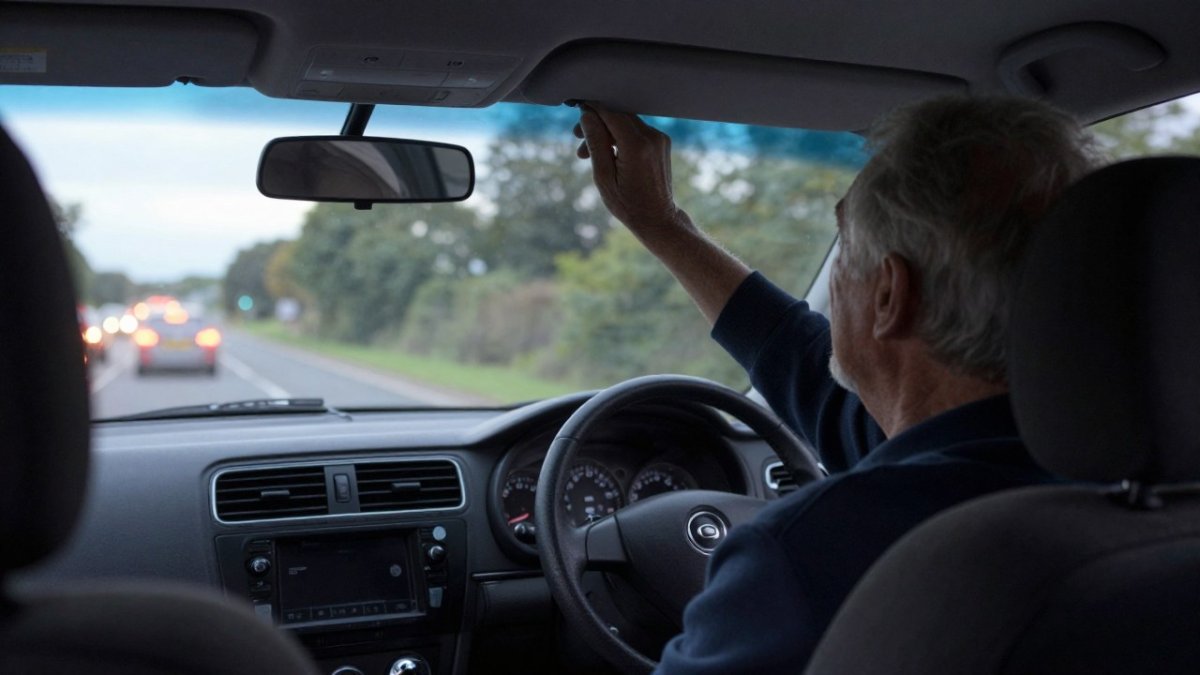
!An older adult sitting in the driver’s seat at dusk, adjusting the rear-view mirror with headlights of oncoming traffic visible through the windscreen
A step-by-step approach:
- Check your prescription first. Before resuming night driving, have your vision and refraction checked. Residual refractive error can worsen glare and halos, and an up-to-date prescription may improve comfort.
- Start on familiar, well-lit roads. Begin with short journeys on routes you know well, at times when traffic is light, and ask a passenger to accompany you for the first few trips.
- Manage windshield glare. Keep the windscreen clean inside and out, replace worn wiper blades, and use the visor or a clean cloth to remove smears that scatter oncoming light. A dirty windscreen can make headlights look far worse than the lens alone would cause.
- Adjust your driving position and mirrors. Set the rear-view mirror to its night setting if it has one, and angle side mirrors to reduce direct reflection from following headlights.
- Reduce speed and increase following distance. Allow extra space from oncoming headlights and brake earlier than you would in daylight.
- Avoid difficult conditions until settled. Heavy rain, fog and unlit rural roads are the hardest conditions for anyone with glare, so postpone them until your vision has stabilised.
- Review with your clinician. If night driving still feels unsafe after the expected adaptation period, book a review. Your surgeon can assess whether symptoms are likely to improve, whether a prescription change would help, or whether another lens design may suit you better.
Watch out: if you feel dazzled or unsure of road edges even on familiar routes, do not continue driving at night until you have been assessed. It is safer to use alternative transport than to drive with impaired night vision.
If you are worried about driving, speak to your surgeon before getting behind the wheel. Our team can assess your night vision and advise on safe return to driving.
Expected Adaptation or Urgent Warning Sign? A Symptom Triage Guide
Some changes in vision are part of normal adaptation, but others need prompt medical attention. The key is to know the difference.
Usually expected:
- Halos or glare around lights that gradually improve
- Mild night-time blurring that eases over months
- Occasional starbursts in very dim conditions
Contact your eye clinic promptly if you notice:
- Sudden loss of vision or a dark curtain across your sight (the NHS)
- Flashing lights or a sudden shower of new floaters
- Pain, redness, or sensitivity to light that is getting worse
- Symptoms that are getting worse rather than better over time
If you notice any of these warning signs, do not wait for your next routine appointment. Contact the clinic straight away.
Persistent symptoms can also reflect residual refractive error, which means your prescription may need updating. You can read more about this in Why Is My Vision Blurry Even With Glasses?
How Clinicians Investigate Persistent Night Vision Symptoms
When night vision symptoms last longer than expected, a specialist will usually work through several checks. The aim is to find the cause and not just treat the symptom.
A typical assessment may include:
- A detailed history of when and where symptoms occur
- Measuring vision and refraction to check for residual refractive error
- Examining the lens position and the health of the eye’s surface and tear film
- Checking the retina and optic nerve for other causes
Eyesandeyelids is led by senior consultant ophthalmologists, supported by senior orthoptists and optometrists. Read this guide to finding a specialist for vision correction if you are looking for the right clinician to investigate your symptoms. This team approach means your symptoms are examined thoroughly, and any underlying condition is considered alongside the lens itself. Patients can also email photographs and questions to check whether they may be suitable for an assessment.
Multifocal Lens Dissatisfaction: Your Options and Next Step with Eyesandeyelids
If you are unhappy with your results, you still have options. Your specialist can review whether symptoms are likely to improve with time, whether a prescription change would help, or whether a different lens design may be more suitable.
Some next steps include:
- Booking a review to assess your vision and lens position
- Discussing whether a refractive adjustment could improve your comfort
- Talking through the trade-offs of different lens designs for your lifestyle
Our specialists at Eyesandeyelids can assess your situation in person and explain your options clearly. To arrange a consultation, book a cataract consultation with our team, or call us on 0796 153 9859.
Eyesandeyelids offers senior consultant-led eye care with over 30 years of experience and modern clinical equipment. Speak to our team about whether a multifocal lens or another option is right for you.
Frequently Asked Questions
Do multifocal lenses cause problems with night vision?
Some people notice halos, glare or starbursts around lights, particularly in dim conditions, after multifocal lens implantation. This happens because multifocal optics split light between several focal points, and the pupil is larger in low light, so more of the light passes through the outer zones of the lens. Many patients find these effects lessen over the first several months as the brain adapts. Persistent or worsening symptoms should be reviewed by an eye specialist, because residual refractive error or dry eye can make night vision feel worse than the lens design alone would explain.
How long do halos and glare last after multifocal lens implantation?
For most people, halos and glare improve gradually over several months, although the adaptation period varies from person to person. Symptoms often feel strongest in the first weeks after surgery and become less noticeable as the visual system adjusts to the new lens. If halos remain unchanged or start to interfere with daily activities after the early recovery period, book a review rather than waiting. The clinician can check the lens position, refraction and the health of the tear film to see whether a treatable cause is contributing.
Can you drive at night with multifocal lenses?
Many people with multifocal lenses drive at night once their vision is stable, but night driving after cataract surgery should be approached with caution at first. Plan shorter journeys on familiar roads, avoid heavy traffic and wet roads where possible, and keep the windscreen and headlights clean. If glare from oncoming headlights is distracting or you find it hard to judge distances, stop driving after dark and seek a professional assessment before resuming. Your eye specialist can advise on whether your vision meets the standards for driving.
When should I contact an eye specialist about halos or blurred vision?
Contact an eye specialist promptly if you notice a sudden loss of vision, flashing lights, a new shadow or curtain across your field of vision, or sudden worsening of blur. These can signal serious problems such as retinal detachment or raised eye pressure and need urgent assessment. Halos that are stable or slowly improving can usually be reviewed at a routine follow-up, but if they persist beyond the expected adaptation period or disrupt your daily life, arrange an appointment rather than waiting for the next scheduled visit.