
Last Updated: November 24, 2026
Quick Summary
Virtual consultations after eye surgery are video or telephone appointments held from home instead of in clinic, used to check your recovery and answer questions. Many routine follow-up questions, such as how your eye feels, how your vision is settling and whether you are using your drops correctly, can be covered on a call. Checks that need hands-on examination generally require an in-person visit.
- A virtual appointment usually needs a device with a camera, a stable internet connection and a quiet room.
- Have your medication list and notes about any changes in your vision ready before the call.
- Eye pressure measurement, examination of the back of the eye and precise sight testing generally need an in-person visit.
- Contact your eye team promptly for sudden pain, a marked drop in vision, flashes or a new shower of floaters.
Table of Contents
- How Virtual Consultations Work After Eye Surgery
- Virtual Follow-Up After Cataract Surgery: What Can Be Assessed Remotely
- When to Contact an Eye Surgeon After Surgery and Book Your Next Step
- Frequently Asked Questions
How Virtual Consultations Work After Eye Surgery
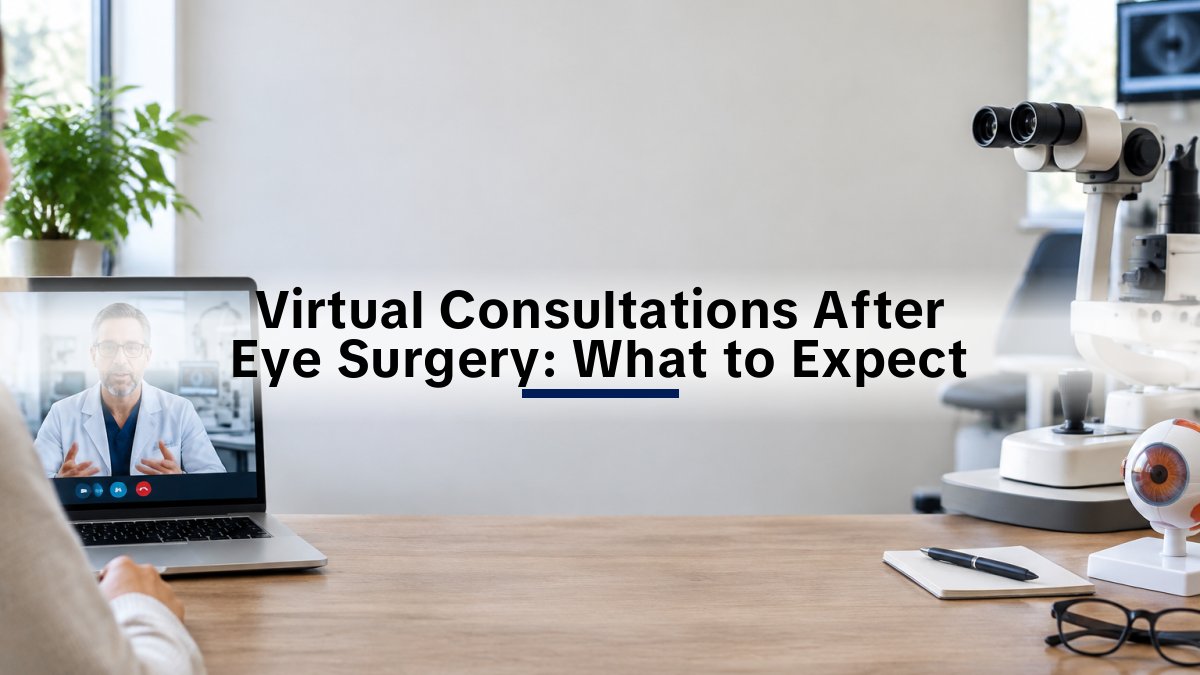
Virtual consultations after eye surgery are video or telephone appointments with your eye care team, held from home instead of in clinic. At Eyesandeyelids, we use them to check on your recovery and answer questions.

A virtual appointment usually needs a device with a camera, a stable internet connection and a quiet room. Before the call, have your medication list and any notes about changes in your vision to hand. For more on what the appointment involves, see How Long Does a Cataract Consultation Take?
Virtual Follow-Up After Cataract Surgery: What Can Be Assessed Remotely
Many routine follow-up questions can be covered on a video call. These include how your eye feels, how your vision is settling, whether you are using your drops correctly and any symptoms you have noticed since surgery. Why Is My Vision Still Blurry After Cataract Surgery? explains common reasons for blurring during recovery.
Some checks need hands-on examination. Measuring eye pressure, examining the back of the eye and testing sight precisely generally require an in-person visit. What Should You Prepare Before Your First Eye Consultation? and How to Prepare for a Cataract Surgery Consultation set out what to have ready for either type of appointment.
When to Contact an Eye Surgeon After Surgery and Book Your Next Step
Contact your eye team promptly if you notice sudden pain, a marked drop in vision, flashes or a new shower of floaters, or redness that is getting worse. These symptoms need urgent assessment, whether or not a virtual appointment is already booked.
If you are unsure whether your symptoms need attention, contact our team to arrange a consultation.
Frequently Asked Questions
Can I have a virtual consultation after eye surgery?
Often, yes. Remote review can suit some questions about comfort and medication routines. Some checks, such as measuring eye pressure or examining the eye closely, still need an in-person visit. Your consultant will tell you which applies to your recovery, and you can contact the team on 0796 153 9859 to discuss your situation.
What symptoms after eye surgery need urgent medical attention?
Contact your eye surgeon urgently if you notice sudden or worsening pain, a sudden drop in vision, flashes or a new shower of floaters, a curtain-like shadow across your sight, or heavy discharge or bleeding. These can signal complications that need prompt in-person assessment. Do not wait for a scheduled virtual appointment if any of these occur. Treat any sudden change in your vision as urgent.
When do I need an in-person appointment after eye surgery?
An in-person appointment is usually needed when your consultant must examine the eye directly, check eye pressure or assess the surgical result in detail. Your surgeon will normally arrange these at set points in your recovery. A virtual consultation does not replace a clinical examination.